


How Many Washes Should Hotel Linen Last? Wash Cycles, Lifespan, and Replacement Timing
Oct 20, 2026
Leave a message
Hotel linen is a recurring operating expense, but replacing towels and sheets too early can increase purchasing costs, while keeping worn-out linen in circulation can affect guest satisfaction and housekeeping efficiency.
For hotel purchasing managers, the important question is not simply how long a towel or sheet can last. It is how many commercial wash cycles the product can withstand while maintaining acceptable absorbency, appearance, dimensions, and structural integrity.
The lifespan of hotel linen depends on several factors, including yarn quality, fabric construction, sewing, washing chemicals, water temperature, drying conditions, and daily handling. Even products made from similar materials may perform differently under different laundry conditions.
In this guide, General Textile explains how to estimate hotel towel lifespan, understand hotel linen wash cycles, identify the causes of premature failure, and develop a practical replacement plan that supports long-term purchasing value.
1. Average Wash-Cycle Lifespan of Hotel Towels and Sheets
There is no universal number of washes that guarantees the lifespan of every hotel towel or sheet. Product specifications, laundry conditions, occupancy, and replacement criteria all influence actual service life.
For preliminary procurement budgeting, hotels can use 180–250 wash cycles as a planning reference for selected hotel linen products, then validate the assumption using supplier samples, laundry testing, and their own operating records.
This range is a planning guideline, not a verified industry-wide guarantee or a promise that every towel and sheet will last for the same number of cycles.
Typical Hotel Linen Lifespan: Planning Reference
|
Linen category |
Indicative planning range |
Key factors to monitor |
|---|---|---|
|
White hotel bath towels |
180–250 wash cycles |
Absorbency, thinning, fraying, holes |
|
Hand towels and face towels |
180–250 wash cycles |
Edge wear, appearance, fabric integrity |
|
Hotel bed sheets |
180–250 wash cycles |
Pilling, thinning, seam failure, shrinkage |
|
Pillowcases |
180–250 wash cycles |
Fabric wear, seam strength, discoloration |
|
Duvet covers |
180–250 wash cycles |
Closures, seams, abrasion, dimensional stability |
|
Bath mats |
Assess separately |
Backing or structure, absorbency, edge wear |
These are provisional budgeting ranges for planning and comparison, not independently verified average lifespans for each product category. Actual service life may be shorter or longer depending on construction, use, and laundry conditions. Bath mats require particular care because their construction can differ substantially from that of ordinary towels.
What Does One Wash Cycle Mean?
For hotel linen management, one wash cycle generally means one completed laundering process for a textile item. It does not necessarily mean one guest stay: a towel may be used several times before laundering, depending on the hotel's service policy.
A useful tracking system should record laundering cycles or use a documented estimation method. If exact item-level tracking is impractical, a hotel can estimate average cycles from occupancy, towel-use patterns, housekeeping procedures, and laundry volumes.
For example, if a towel is laundered approximately once per day, 200 wash cycles could be reached in roughly 200 days. If the towel is laundered twice daily, the same number of cycles could be reached in about 100 days.
These are illustrative calculations, not predictions of actual product lifespan.
Why Does Wash-Cycle Lifespan Matter to Procurement?
A lower-priced towel is not necessarily the more economical choice if it needs to be replaced much sooner.
Purchasing teams should evaluate:
Initial purchase price per piece.
Expected usable wash cycles.
Laundry and drying expenses.
Labor and handling costs.
Replacement frequency and emergency replenishment.
Guest complaints and the cost of maintaining consistent room standards.
A consistent evaluation method helps hotels compare quotations based on expected operational value rather than unit price alone.
2. What Actually Shortens Linen Life?
Hotel towels and sheets are exposed to repeated washing, chemical treatment, mechanical action, drying, folding, storage, and daily use. Premature wear often results from a combination of these factors rather than one isolated cause.
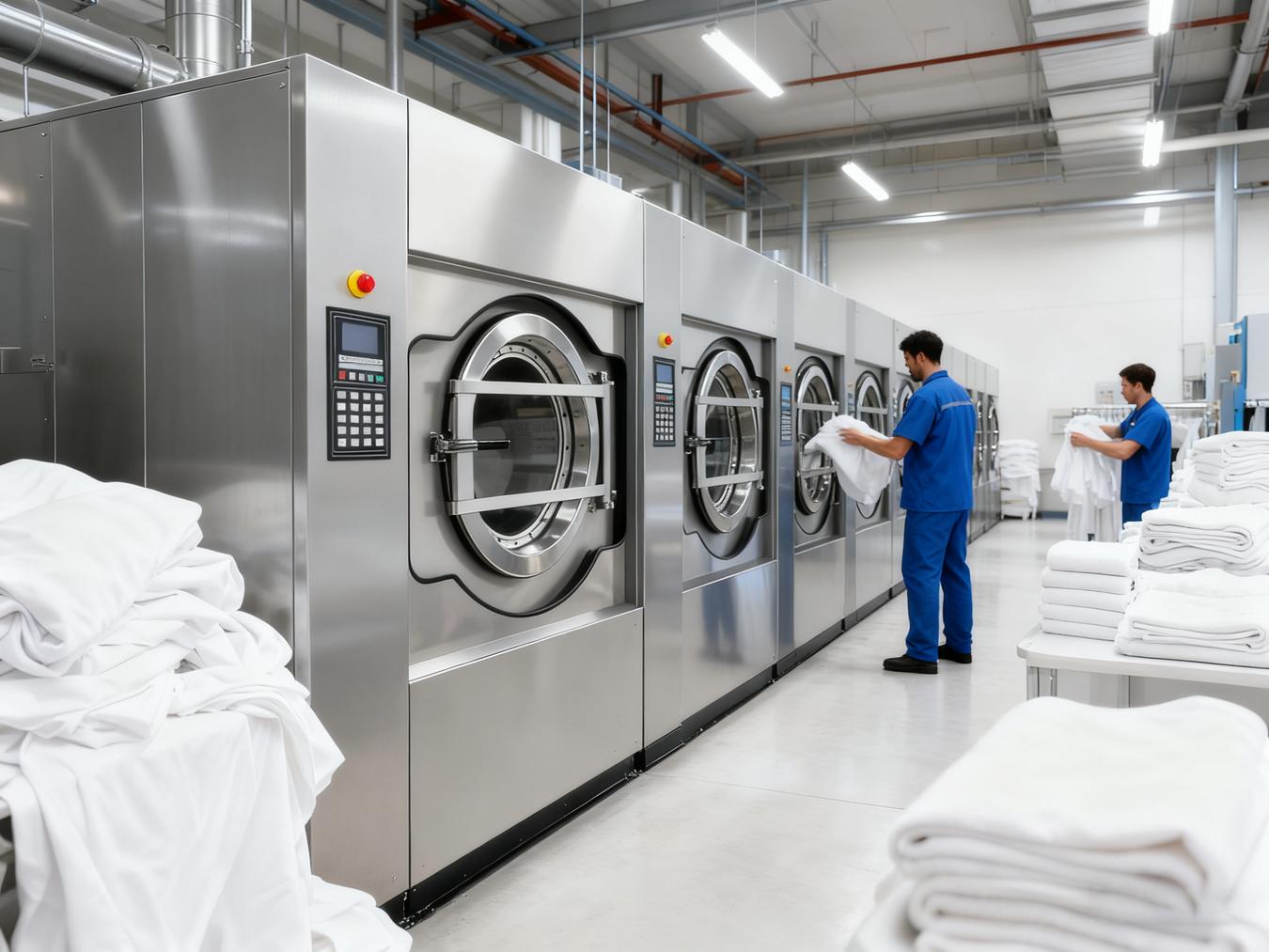
1. Excessive Bleach and Incorrect Chemical Dosing
Bleaching and other laundry chemicals must be selected and dosed according to the textile, soil level, and washing system.
Excessive bleach exposure or incorrect chemical dosing can weaken fibers, accelerate fabric damage, and contribute to holes or reduced tensile strength. Inappropriate chemical handling may also cause discoloration or uneven appearance.
For white hotel towels and sheets, maintaining a clean appearance is important, but using stronger chemicals than necessary is not a reliable way to extend textile life.
Recommended practice:
Follow chemical supplier instructions and textile care requirements.
Control dosing according to load size and soil level.
Avoid unnecessary repeated bleaching.
Investigate recurring discoloration rather than automatically increasing chemical concentration.
2. Overdrying and Excessive Heat
Overdrying can expose textile fibers to unnecessary heat and mechanical action. Repeated exposure may contribute to brittleness, fiber damage, shrinkage, and accelerated edge or seam deterioration.
Towels and sheets should be dried according to their material and care requirements. Drying settings should account for load size, residual moisture, equipment performance, and the intended finishing process.
Recommended practice:
Use validated drying settings, avoid unnecessarily long drying times, and inspect the condition of linen at regular intervals.
3. Water Temperature and Washing Chemistry
Water temperature affects cleaning performance, chemical effectiveness, shrinkage, and the stresses placed on textiles. The correct temperature depends on the fabric, detergent system, soil level, and hygiene requirements.
Very high temperatures are not automatically better. However, reducing temperature without considering hygiene and soil-removal requirements can also create problems.
Recommended practice:
Establish a validated wash formula with the commercial laundry provider. Balance temperature, detergent concentration, wash duration, mechanical action, and hygiene standards rather than changing one parameter in isolation.
4. Excessive Mechanical Action and Overloaded Machines
Overloading a washing machine can reduce cleaning effectiveness and create inconsistent processing. Excessive mechanical action, poor load distribution, and rough handling may contribute to abrasion, seam damage, and fabric wear.
Housekeeping and laundry teams should follow equipment loading guidelines, separate products appropriately, and avoid pulling wet linen aggressively during handling.
5. Repeated Friction, Poor Storage, and Rough Handling
Towels and sheets can deteriorate through repeated contact with rough surfaces, damaged equipment, sharp edges, and poorly maintained carts.
Incorrect folding and storage practices may not be the main cause of fabric failure, but they can contribute to unnecessary handling damage and inconsistent presentation.
A Practical Linen Failure Checklist
|
Visible problem |
Possible cause to investigate |
Suggested action |
|---|---|---|
|
Towels develop holes |
Fiber weakening, abrasion, excessive chemical exposure |
Review laundry chemistry and handling |
|
Edges fray or seams open |
Stitching quality, abrasion, finishing or handling |
Inspect seams and laundering procedures |
|
Sheets become thin |
Repeated wear, fiber damage, excessive mechanical action |
Compare samples and review wash conditions |
|
Towels feel harsh |
Detergent residue, water conditions, finishing or fiber changes |
Review rinsing and laundry chemistry |
|
White linen becomes discolored |
Chemical imbalance, contamination, water or storage issues |
Identify the source before changing the formula |
|
Size changes significantly |
Fabric construction, finishing, heat, washing conditions |
Measure samples before and after laundering |
3. Ring-Spun vs Open-End Cotton: Why Yarn Quality Decides Lifespan
Yarn construction is one factor that can influence the performance of cotton hotel towels and bed linen. Ring-spun and open-end, or rotor-spun, yarns are produced using different spinning methods and may have different characteristics.
However, yarn type alone does not determine how long a finished textile will last. Fiber quality, yarn specifications, fabric construction, finishing, sewing, and laundry conditions all matter.
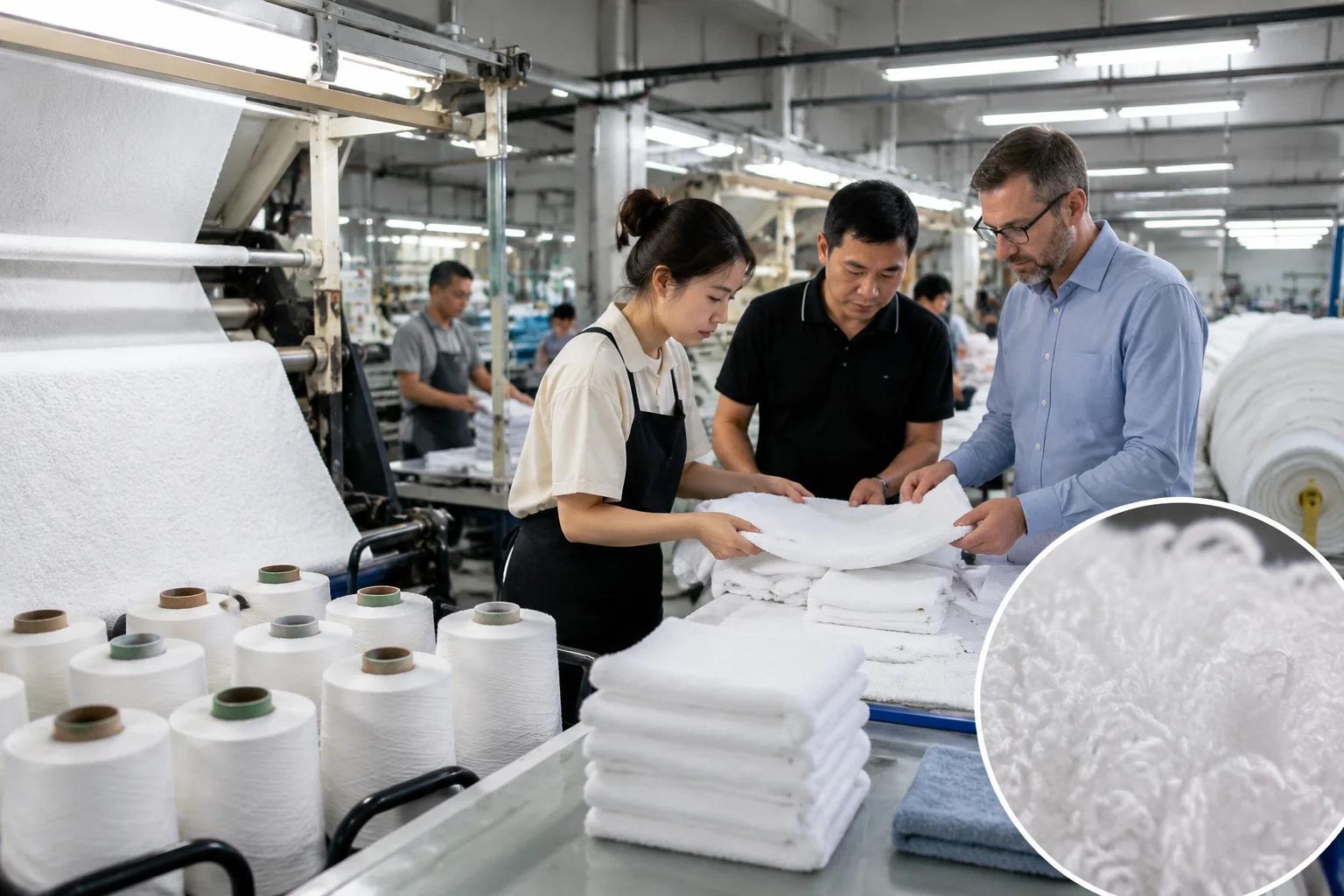
Ring-Spun Cotton
Ring-spun yarn is produced by drafting and twisting fibers using a ring-spinning system. Depending on fiber selection and yarn specifications, ring-spun cotton can offer a relatively smooth hand feel and good yarn strength.
Potential advantages for hotel linen include:
A comfortable hand feel.
Good yarn strength when appropriately specified.
Suitability for products where surface appearance and tactile quality are important.
Flexibility in developing different fabric constructions and product grades.
Ring-spun cotton is often considered for hotel towels and bed linen where buyers value a balance of comfort, appearance, and durability.
Open-End Cotton
Open-end cotton yarn, commonly associated with rotor spinning, is produced through a different spinning process. It can be an efficient option for certain commercial textile applications.
Its performance depends on the fiber blend, yarn count, manufacturing controls, and finished fabric construction.
Potential considerations include:
Production efficiency and cost.
Suitability for the intended fabric construction.
Required fabric strength and appearance.
Performance under the property's washing conditions.
It would be inaccurate to say that every ring-spun product lasts longer than every open-end product. Buyers should compare actual yarn and fabric specifications, sample quality, and laundering results rather than relying on the spinning method alone.
What Should Hotel Buyers Ask Their Supplier?
When evaluating commercial hotel towels or sheets, ask for:
The specified fiber composition and yarn type.
Relevant yarn and fabric specifications.
Details of fabric construction and finishing.
Sewing, edge-finishing, and dimensional tolerances.
Quality inspection criteria.
Sample-testing procedures and expected performance under the intended laundry process.
At General Textile, the manufacturing process covers fabric weaving, towel production, bedding products, and garment production. Coordinating material selection, weaving, sewing, finishing, and inspection helps establish consistent product specifications for hotel linen purchasing.
4. When to Replace vs When to Rotate
Not every worn-looking towel needs immediate disposal, and not every item should remain in guest rooms until it reaches a predetermined wash count.
The decision should be based on the item's condition, intended use, hygiene requirements, and the hotel's service standards.
When to Keep Linen in Rotation
Continue using linen when it remains fit for its intended purpose and meets the hotel's quality requirements.
Examples include:
Towels with minor cosmetic changes but acceptable absorbency and structural integrity.
Sheets with slight appearance changes that remain clean, comfortable, and free from damaging defects.
Products that have completed many wash cycles but still meet inspection standards.
Wash count should trigger inspection, not automatic approval or rejection.
When to Remove Linen from Guest-Room Use
Remove products from guest-room circulation when they no longer meet the hotel's approved standards.
Common reasons include:
Holes, tears, or significant thinning.
Frayed edges or open seams.
Persistent stains or unacceptable discoloration.
Reduced absorbency or poor hand feel that affects guest comfort.
Excessive shrinkage or dimensional changes.
Hygiene or contamination concerns that cannot be resolved through the approved process.
Where appropriate, some items may be reassigned to lower-intensity uses, such as designated cleaning tasks, provided they are clearly separated from guest linen and handled under the hotel's hygiene procedures.
A Practical Replacement Policy for Hotel Buyers
A workable policy should define:
The approved specifications for each linen category.
The expected wash-cycle range used for budgeting.
The inspection schedule and acceptable condition criteria.
The defects that require immediate removal.
The rules for rotating or downgrading usable items.
The inventory threshold that triggers replenishment.
The records needed to review supplier and product performance.
Using 180–250 washes as an initial planning reference can help estimate replacement budgets, but the hotel's own records should determine the final replacement interval.
For new properties, major refurbishments, or multi-property procurement projects, sample approval and documented quality requirements are especially valuable. They establish a baseline for comparing future deliveries and investigating unexpected wear.
5. Frequently Asked Questions About Hotel Linen Lifespan
1. How long do hotel towels last?
Hotel towel lifespan varies according to material, construction, washing conditions, usage intensity, and quality standards. For preliminary budgeting, some hotels may use 180–250 wash cycles as a planning reference, then adjust it based on actual inspection and replacement records.
2. How many washes should hotel sheets last?
There is no universal wash-cycle guarantee for hotel sheets. A 180–250-cycle planning range can be used as an initial budgeting assumption for selected products, but the actual replacement point should be determined by fabric condition, seam integrity, dimensional stability, and the property's laundry process.
3. Does bleach damage hotel towels?
Excessive or incorrectly dosed bleach can weaken cotton fibers and contribute to premature wear. Hotels should follow the textile care instructions and laundry chemical supplier's guidance, while maintaining the cleaning and hygiene standards required for their operations.
4. Do ring-spun cotton towels last longer than open-end cotton towels?
Not necessarily in every application. Ring-spun and open-end yarns have different characteristics, but finished towel durability also depends on fiber quality, yarn specifications, fabric construction, finishing, sewing, and laundering. Buyers should compare samples and verified performance rather than judging lifespan by yarn type alone.
5. How can hotels reduce linen replacement costs?
Hotels can reduce avoidable replacement costs by standardizing product specifications, using appropriate laundry formulas, controlling drying conditions, rotating inventory consistently, inspecting linen regularly, and recording the causes of premature failure. Evaluating cost per usable wash also helps purchasing teams compare products more meaningfully than unit price alone.
Improve Your Hotel Linen Purchasing Strategy with General Textile
Hotel linen durability depends on the interaction between manufacturing quality, product specifications, and daily laundry management. By monitoring wash cycles, investigating early failure, and defining clear replacement criteria, hotels can make more predictable purchasing decisions and maintain consistent guest-room standards.
General Textile provides hotel towel and bedding solutions for hospitality buyers, with manufacturing capabilities spanning fabric weaving, towel production, bedding products, garment production, and quality inspection.
For your next hotel project or replenishment order, share your required specifications, estimated quantities, and laundry conditions with our team.
Contact General Textile to discuss hotel towels and bedding designed around your property's operational requirements.
Explore our white cotton hotel towels and hotel bedding products to start planning your next linen purchase.